 Premium Porcelain & Smile Artistry in Bergen County
Gentle, Advanced Dental Care for the Whole Family | Same-Day Emergencies | Insurance Accepted

Dr. Maryz Estedrak, DDS

4.9 Star Rated

100% Custom Porcelain
You stop smiling in photos. You catch yourself chewing on one side. Maybe you've memorized which foods to avoid at dinner with friends. A missing tooth - or several - has a quiet way of rearranging your life.
We hear it from patients every week at EverSmile Dental. Not the dental jargon. Just the small frustrations that pile up. The gap you cover with your lip. The denture that clicks when you laugh. The bridge that started feeling loose two years ago. Whatever brought you to this page, you're not alone, and you're definitely not stuck.
Dental implants have transformed missing tooth replacement into something more like a quiet restoration of who you already are. If you've been searching for implant dentistry near me in Maywood, NJ, here's a real look at the procedure, the options that exist, and why so many of our neighbors trust us with this kind of work.

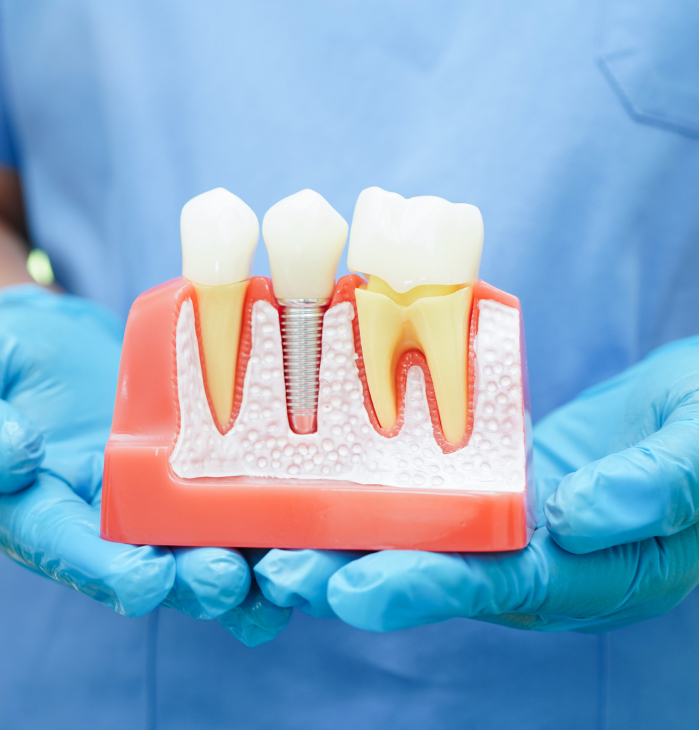
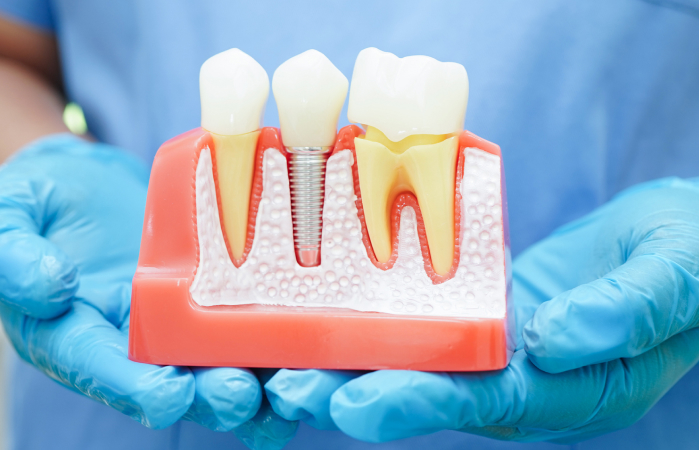
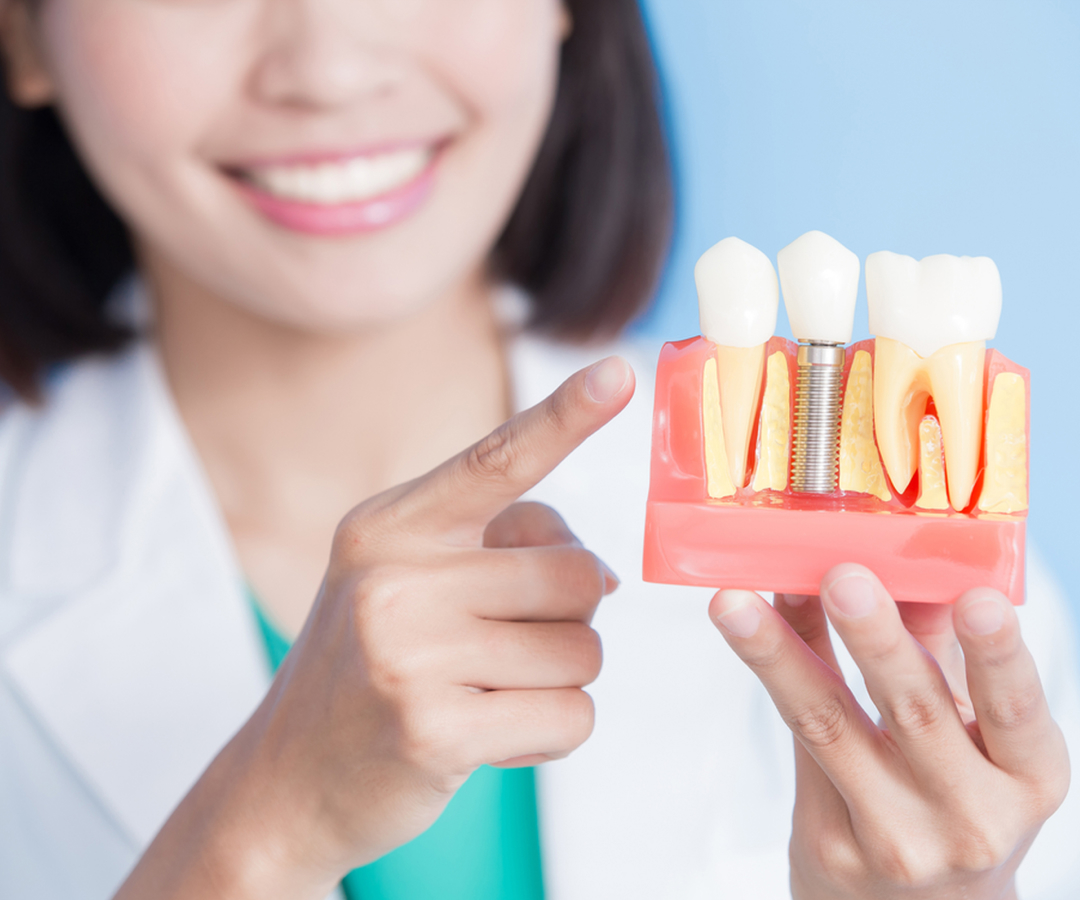
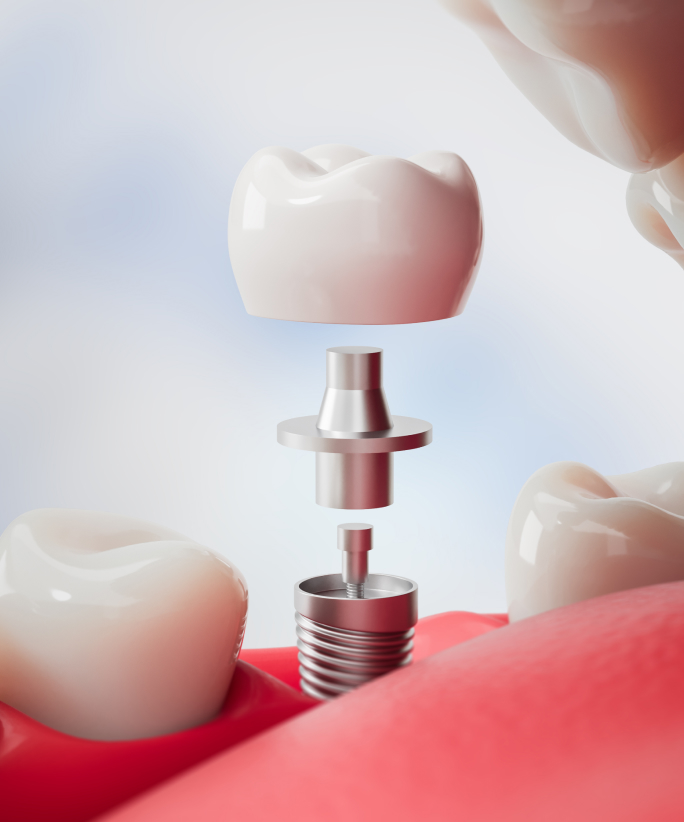
Strip away the marketing language, and a dental implant is three parts working together to mimic a real tooth from root to crown.
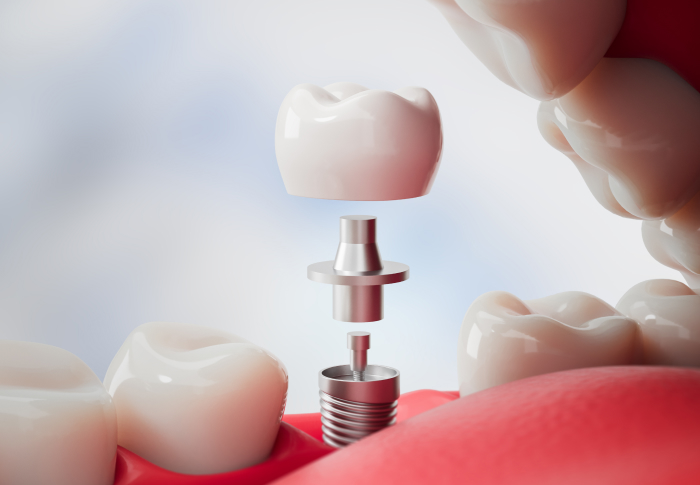
First, a small titanium post - about the size and shape of a tooth root - is placed into the jawbone where your missing tooth used to be. Over the next few months, the bone grows around it (a process called osseointegration), turning the post into a permanent anchor. Then a small connector called an abutment is attached, and finally a custom crown is placed on top. The crown is shaped, shaded, and polished to match the teeth around it.
The result is the closest thing modern dentistry has to a real tooth. It doesn't shift when you talk. It doesn't slip out at a wedding. You floss it, brush it, and chew with it the way you would your own. For most people, the natural-looking dental implants we place are the kind that even close friends don't notice - and that's rather the point.
A lot of people assume implants are only for older adults missing all their teeth. They're not. Patients come to us at every age and stage, often with one of these stories:
A single tooth lost years ago to a cracked filling, a sports injury, or just bad luck - and a gap that's slowly widened as neighboring teeth drift toward it.
A denture that fit fine at first but now slides, clicks, or rubs the gum raw by mid-afternoon.
A bridge that's been replaced once or twice and is failing again, taking adjacent teeth with it.
Multiple teeth lost to gum disease, with the rest of the mouth quietly compensating.
Full-arch tooth loss that's started to change the shape of the face - sunken cheeks, a shorter-looking lower jaw, a lip that turns inward.
If any of that sounds familiar, you're a candidate worth evaluating. So is anyone who's just been told they need an extraction and is wondering what comes next.
People sometimes arrive expecting a single procedure called "implants." In reality, there's a spectrum of teeth replacement options, and the right one depends on how many teeth are missing, where they are, and what your jawbone looks like underneath. Here's the short version of each.
The simplest case. One implant, one crown. No grinding down the healthy teeth on either side - which is the major drawback of a traditional bridge. A single tooth implant stands on its own and protects the bone underneath, the same way the original root did.
When two or three teeth are gone in a row, you don't need an implant for each one. Two strategically placed implants can support a small bridge between them, which means fewer surgical sites, less time in the chair, and the same chewing strength.
For patients missing most or all of their upper or lower teeth, full arch dental implants replace the entire row with a fixed set of teeth anchored on four to six implants. This is often referred to as All-on-4 dental implants - a specific technique where four precisely angled implants support a full arch of teeth. It's the closest you can get to a brand-new set of natural teeth in a single, planned treatment.
If you already wear dentures and have made peace with them, this is the upgrade most people don't realize exists. Instead of relying on adhesive and suction, implant supported dentures snap onto two to four implants placed in the jawbone. They stay put when you eat steak, laugh out loud, or sing along to the radio. You can still remove them for cleaning, but the slipping is gone.
In select cases - usually when the surrounding bone is healthy and the situation calls for it - we can place an implant and a temporary crown in a single visit. Same day dental implants aren't right for every patient, but when they are, they spare you months of wearing a flipper or going without a tooth in a visible spot. We'll walk you through whether you're a candidate during your consultation.
We've fitted plenty of bridges and dentures over the years, and they still have their place. But when patients ask us, off the cuff, what we'd choose for ourselves - the answer is almost always implants. Here's why.
A bridge requires your dentist to shave down the healthy teeth on either side of the gap to anchor it. Those teeth are now under more stress than they were designed for, and statistically, they fail sooner. A dental implant leaves your neighboring teeth alone.
A denture sits on top of your gums. The bone underneath, no longer stimulated by tooth roots, slowly shrinks. That's why long-term denture wearers often see their face shape change over the years - the foundation is literally dissolving. Implants act like roots. They tell the bone to stay.
And then there's the lived experience. Dentures need adhesives, soaking, and a different way of eating. Implants don't. You brush and floss them. That's it.
Implant work has gotten dramatically better in the past decade. We've leaned into that - not because new technology is exciting (though it is), but because it produces better outcomes for the people in our chairs.
Every implant case at our practice starts with 3D imaging that maps your jawbone in detail. We can see where the bone is dense, where it's thin, and where major nerves and sinus structures sit. That means we can plan the implant placement to the millimeter before we ever pick up an instrument.
For patients who lack the bone volume to support an implant, we offer grafting techniques that have made it possible to treat cases that, fifteen years ago, would have been told no. Many people who've been told elsewhere that they "aren't candidates" turn out to be - once the foundation is rebuilt.
Crowns and bridges are designed digitally and shaped to match the color, contour, and translucency of the teeth around them. For cosmetic dental implants in the visible smile zone - front teeth, canines, premolars - this level of precision is what separates a tooth that looks like an implant from a tooth that just looks like yours.
This is what advanced implant dentistry looks like in practice: not flash, just better planning, better materials, and better hands.
There's a difference between fixing a tooth and restoring a smile.
A good dental implant specialist thinks about both. The bite has to work. The gum has to heal cleanly around the crown. The shade has to match the teeth next to it under different lighting. And the result has to age well - five, ten, twenty years down the road.
Smile restoration is the bigger picture we keep in mind, even when a patient comes in for a single tooth. The mouth is one connected system. A well-placed implant supports the teeth around it, preserves the jawbone, and keeps your facial structure where it should be. A poorly placed one creates problems that surface years later.
We'd rather take an extra appointment and get it right than rush and revise.
Choosing the best dental implant dentist for your case isn't really about marketing claims. It's about who you trust to put something permanent in your jaw. A few things our patients mention most:
Dr. Maryz Estedrak and our team handle straightforward single-tooth replacements alongside full mouth dental implants and everything in between. The volume matters. So does the variety.
We don't run our schedule like an assembly line. Consultations are real conversations, with the imaging on screen and your questions actually answered. If you've left other offices feeling rushed, you'll notice the difference within the first ten minutes.
3D cone-beam imaging, digital impressions, guided surgical placement, in-house planning. These aren't talking points - they're how we deliver outcomes that look natural and last.
A lot of what's grown this practice has been word of mouth from one patient to a parent, a spouse, a coworker. That's the kind of trust we work to earn, one visit at a time.
Whether you're coming from down the road or from a neighboring town, our office on Midland Avenue is easy to reach, and parking is never the headache it is at hospital-based practices.

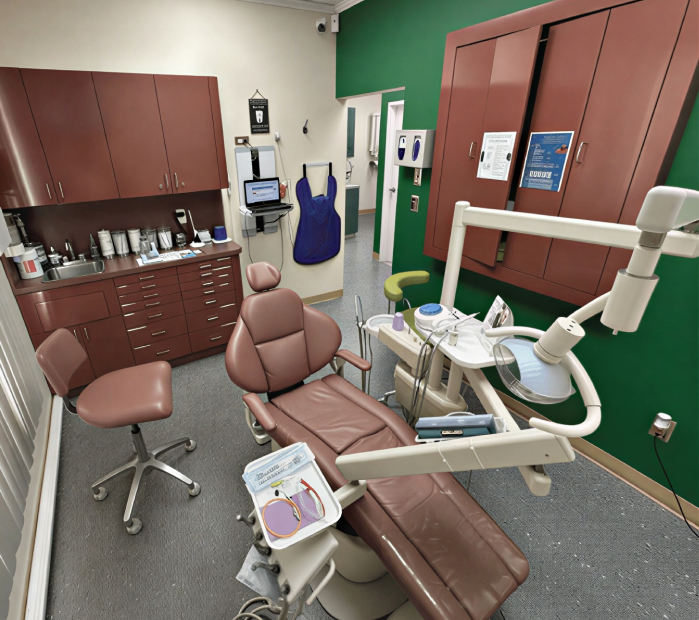
The implant consultation is where everything starts, and it's also where most of the anxiety usually goes away.
We'll review your medical and dental history, take 3D imaging when needed, and look closely at the area where the implant will go. We'll talk through your options - the realistic ones for your specific case, not a generic menu - and we'll show you what each one would actually look like. If a staged treatment or referral makes more sense for your situation, we'll tell you that, too.
You'll leave with a clear plan and real answers to the questions you came in with. No pressure to schedule on the spot.
With good oral hygiene and regular checkups, dental implants are designed as a permanent tooth replacement. The titanium post itself can last a lifetime in most patients. The visible crown on top may eventually need to be replaced after many years of wear, similar to any other dental restoration.
That's the goal - and with modern materials and digital design, it's a realistic one. The crown is custom-shaded and shaped to match the teeth on either side. Most patients tell us they forget which tooth is the implant within a few weeks of placement.
Age, by itself, isn't a disqualifier. We've placed implants in patients in their seventies and eighties. What matters more is the health of your jawbone and your general medical status, both of which we evaluate during your consultation.
Yes. Full mouth dental implants - typically using four to six implants per arch - give you a fixed set of teeth that function and look like the originals. For many patients, this is one of the most life-changing procedures we offer.
Often within a couple of weeks. Your first step is the consultation, where we'll build the plan and timeline together. Some patients are eligible for same day dental implants for select tooth positions, while more complex cases benefit from staged treatment.

If you've been quietly putting this off - researching at midnight, comparing options, weighing whether it's worth it - we'd like to be the conversation that gets you off the fence.
Whether you're considering a single tooth implant, exploring full arch dental implants, or just want a straight answer about implant supported dentures, we're here to walk you through it.
Call us at (201) 773-3992 to schedule your implant consultation, or book online at your convenience. Our office in Maywood, NJ welcomes new patients from surrounding communities every week - and there's a good chance we can fit you in this week.
Your smile has been waiting. Let's get it back.
 Call Us (201) 773-3992